Wall Street Journal: House Passes Legislation to End Normal Trade Relations With Russia
WASHINGTON—The House easily passed legislation Thursday to end normal trade ties with Russia over its invasion of Ukraine, moving quickly to approve the measure after President Biden announced his support last week.
The Suspending Normal Trade Relations with Russia and Belarus Act passed 424 to 8 on a fast-track procedure that requires at least two-thirds of lawmakers support the measure. The bill now heads to the Senate. That chamber has a matching bill with bipartisan support and Majority Leader Chuck Schumer (D., N.Y.) said he would work to move it quickly.
The legislation would strip Russia and Belarus—a country closely aligned with Russia that has been used as a staging ground for its Ukraine invasion—of their most-favored-nation trade status, a step that would result in higher tariff rates on some imports from the countries.
Eight Republicans voted against the legislation. The “no” votes were Rep. Andy Biggs of Arizona, Dan Bishop of North Carolina, Lauren Boebert of Colorado, Matt Gaetz of Florida, Marjorie Taylor Greene of Georgia, Glenn Grothman of Wisconsin, Thomas Massie of Kentucky and Chip Roy of Texas.
Ukraine Theater-Turned-Shelter Bombed, Biden Thinks Putin Is a War CriminalPlay video: Ukraine Theater-Turned-Shelter Bombed, Biden Thinks Putin Is a War Criminal
The measure would mark the latest effort by the U.S. and allies to isolate Russia from international commerce, and Congress and the White House are exploring further ways to punish Moscow and aid Kyiv. In his speech to Congress on Wednesday, Ukrainian President Volodymyr Zelensky said the U.S. should sanction Russian politicians and that the U.S. should cut off all Russian imports as he also called for more military aid.
To maximize the pressure on Russia and Belarus, the bill would give Mr. Biden the authority to order additional increases in import duties for certain products, pushing them above the rates that would result from simply ending the most-favored-nation, or MFN, status. While the bill doesn’t specify those items, candidates would include non-energy products such as aluminum, wood and wood veneer products, and chemicals including fertilizer, according to Rep. Kevin Brady (R., Texas), a co-sponsor of the bill.
The legislation also requires the U.S. trade representative to urge Russia to be suspended from the World Trade Organization and to stop Belarus’s membership application process. It is a symbolic gesture as the WTO currently doesn’t have a legal framework for terminating a member country—and changing that would require a complex and time-consuming process.
If the two countries halted the invasion, the legislation would allow Mr. Biden to bring back normal trade relations, but Congress could overrule the president.
“It is past time to cut off Vladimir Putin’s regime from the benefits of the global trade system,” said Sen. Ron Wyden (D., Ore.), the chairman of the Senate Committee on Finance, calling the trade penalties “the harshest economic measures seen in a generation.”
The trade legislation is one of several policies where a bipartisan coalition of lawmakers have initially pushed for a more aggressive response than the White House. The Biden administration has often followed Congress after consulting with U.S. allies, and, in some cases, announcements have been made in coordination between countries, including a ban on imports of Russian energy and sanctioning Russian banks and oligarchs.
A bipartisan group of lawmakers are now urging the administration to send more weapons to Ukraine, including helping to facilitate the transfer of jet fighters. So far, the Pentagon has said such a move would be too risky.
Stripping Russia of its most-favored nation status is a largely symbolic step for the U.S. Bilateral trade with Russia is modest to start with. And as part of its expanding sanctions regime, the U.S. has already banned imports of oil, gas and seafood products including crabmeat, which make up a majority of the purchases. Overall trade between the U.S. and Russia totaled $36.1 billion in two-way goods trade in 2021, making Russia the U.S.’s 23rd-largest trading partner, according to Census Bureau data.
And tariff rates on many of the remaining products would be zero or minimal, even after the end of the MFN status. For example, the non-MFN rates are zero for fertilizer and specialty metals such as palladium and uranium, key materials for some U.S. industries.
The provision allowing the president to impose additional tariff increases, effective through the beginning of 2024, could close this gap, potentially subjecting products like fertilizer to higher rates. Such increases, according to the legislation, would require advance notice to Congress and an explanation of the basis for and potential impact of the increased tariffs.
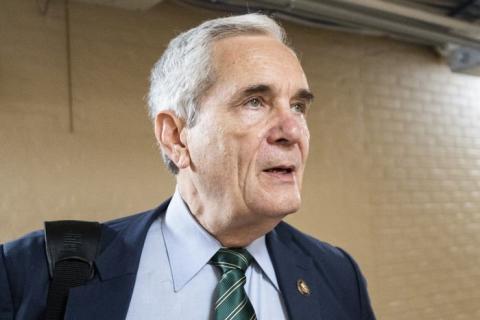
“While we now know that such economic measures are having no immediate impact to limit the slaughter from Putin’s war of annihilation, it remains important to isolate Russia and Belarus from any benefits of the world economy,” said Rep. Lloyd Doggett (D., Texas), the original sponsor of the legislation.
Revoking of the MFN status is implemented in coordination with other members of the Group of Seven nations. Canada and Japan have announced ending their normal trade ties with Russia, while the European Union, with its hefty reliance on Russian products, has also taken steps to limit imports.
Most-favored nation treatment is a key principle of the WTO, requiring member countries to guarantee equal tariff and regulatory treatment to other members.